
RBT (Registered Behavior Technician) Exam
RBT (Registered Behavior Technician) Exam – U.S.
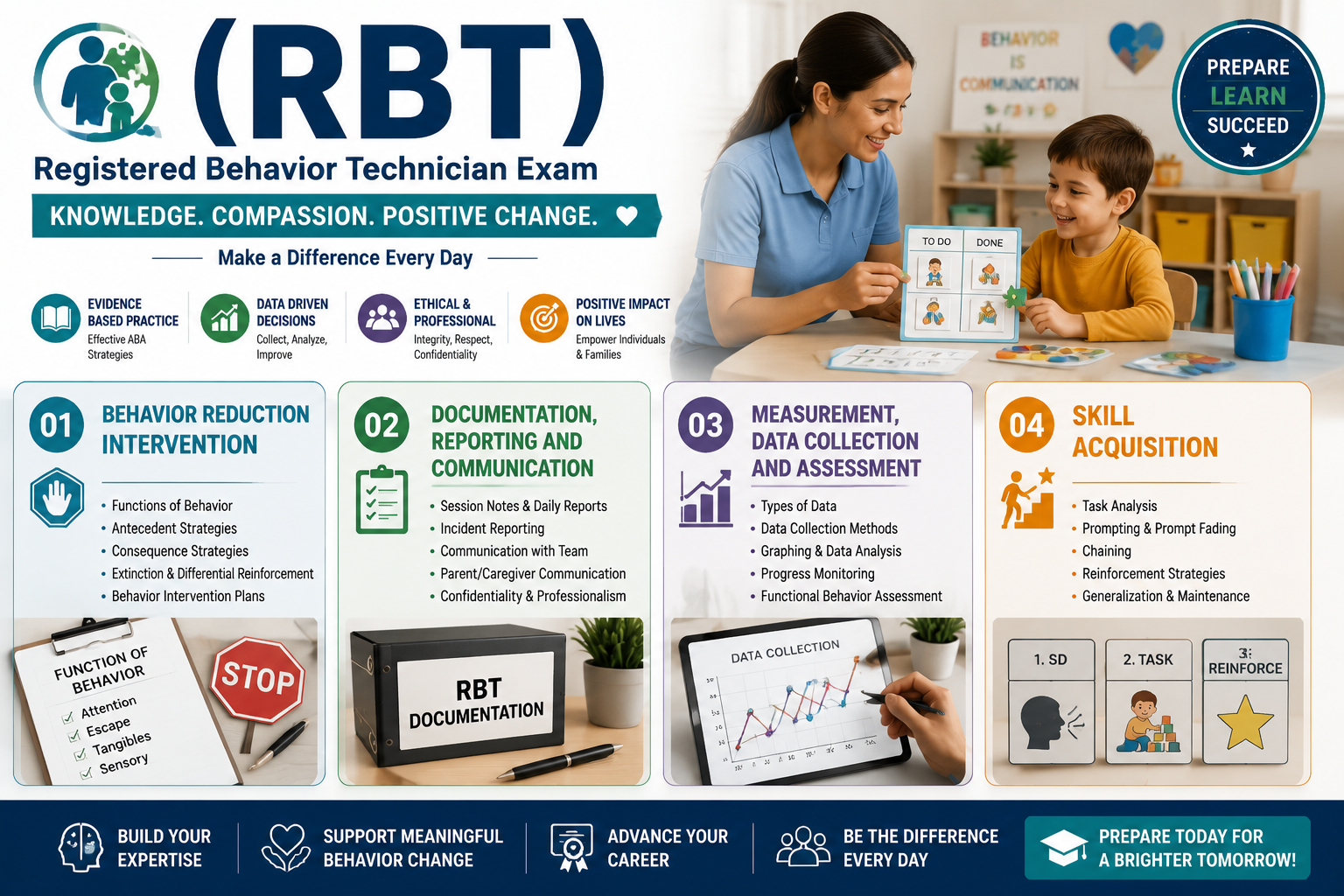
The RBT (Registered Behavior Technician) Exam in the United States evaluates the professional knowledge and practical understanding required to provide behavior analysis services under the supervision of a qualified behavior analyst. The examination covers behavior reduction strategies, documentation practices, data collection methods, assessment procedures, and skill acquisition techniques. Proper preparation helps candidates understand applied behavior analysis principles and provide effective, ethical, and evidence-based support to clients.
Behavior Reduction Intervention
This subject focuses on strategies used to decrease challenging behaviors and promote positive behavioral outcomes. Candidates learn about behavior reduction procedures, reinforcement techniques, antecedent strategies, intervention implementation, and ethical practices for supporting appropriate behavior change.
Documentation, Reporting and Communication
This section covers accurate documentation, professional reporting, and effective communication practices in behavior services. Candidates learn about recording session information, maintaining confidentiality, communicating with supervisors and caregivers, and following professional documentation standards.
Measurement, Data Collection and Assessment
This subject focuses on methods used to observe, measure, and evaluate behavior. Candidates learn about data collection techniques, measurement systems, behavior assessment procedures, recording methods, and using collected information to support effective treatment decisions.
Skill Acquisition
This section covers teaching strategies used to develop new skills and improve client independence. Candidates learn about skill-building procedures, reinforcement methods, prompting techniques, task analysis, instructional strategies, and implementing behavior-based learning programs.
This RBT Registered Behavior Technician Exam preparation material helps candidates strengthen their applied behavior analysis knowledge, understand professional responsibilities, practice essential concepts, and confidently prepare for a career supporting individuals through evidence-based behavioral interventions in the United States.
Customer Reviews
No reviews yet.
Secure Checkout
24/7 Support